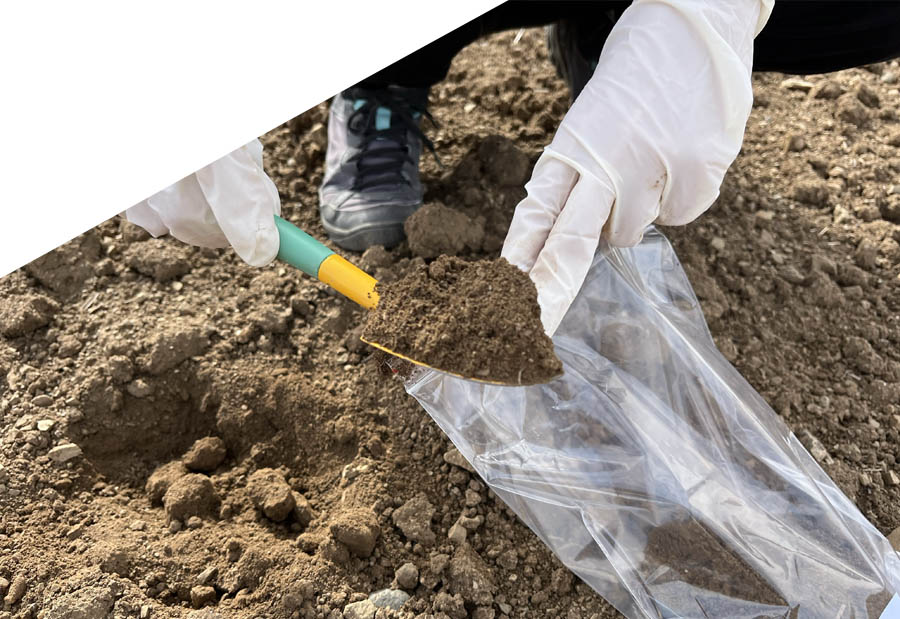
What Is Soil Health Analysis?

SoilBiom Soil Health Analysis is a comprehensive approach that evaluates not only the physical and chemical properties of soil, but also its biological characteristics. A healthy soil is not defined solely by its production capacity; it is a living system capable of maintaining its vitality and adapting to environmental changes. For this reason, soil health cannot be understood through a single measurement, but rather through the combined interpretation of data from multiple layers.
For many years, soil analysis was primarily associated with parameters such as pH, organic matter content, and macronutrient levels. These measurements are still important. However, today it is clearly understood that soil is not merely a chemical medium, but a living ecosystem. In crop production, microorganisms, fungi, insects, and many other organisms actively participate in soil processes. Soil health analysis plays a key role in understanding how these living components interact with plants.
Why Is Soil Health Analyzed?
Soil is a complex structure that hosts billions of microorganisms as well as other macro-organisms. Microorganisms living in the soil directly influence numerous processes, including nutrient cycling, plant health, disease pressure, and stress tolerance. This biodiversity often becomes visible only when chemical control is applied against plant diseases. The presence and function of many other microorganisms, however, remain largely invisible and cannot be fully understood through traditional culture-based methods.
Soil health analysis makes this hidden biological layer visible and interpretable in terms of overall soil health. The objective is not only to measure the current condition of the soil, but to understand the direction in which it is evolving. A soil may be productive today, yet still carry future risks if its biological balance is disturbed. A holistic analysis enables the early identification of such risks, providing insight not only into the present state of the soil, but also into its long-term sustainability.
What Components Does Soil Health Analysis Include?
Soil health analysis is not a single-dimensional assessment. It is evaluated through three interrelated components:
-
Physical structure, which refers to the soil’s water-holding capacity, aeration, and suitability for root development.
-
Chemical structure, which includes parameters such as nutrient elements, pH, and salinity.
-
Biological structure, which reflects soil biodiversity, biological activity, and the balance of living organisms.
A proper soil health analysis requires these three components to be considered together. Among them, biological structure provides the strongest signals regarding long-term soil health. A decline in soil biological activity is one of the clearest indicators that agricultural production is becoming unsustainable.
Why Is Soil Biodiversity Analysis Important?
The biological structure of soil lies at the core of the relationship between plants and the soil environment. The more balanced the microbial diversity, the more efficiently nutrient cycles function. Disease suppression, plant resilience to stress, and the sustainability of yield are all largely dependent on this biological balance.
Soil biodiversity analysis examines microbial structure using genomic and DNA-based methods, making this balance measurable. In this way, not only the current condition of the soil, but also potential risks and areas for improvement can be identified.
What Does Soil Health Analysis Provide?
Soil health analysis offers a clear framework for producers and decision-makers. It enables the identification of strengths, areas requiring improvement, and emerging risks based on data. This approach replaces intuition-based decisions with a measurable and traceable process.
The results of the analysis are not merely a report. When properly interpreted, they become a guide that informs practical applications. This makes it possible to protect soil resources, sustainably increase productivity, and monitor ecosystem health over the long term.
Soil Health Analysis Through the SoilBiom Approach
SoilBiom considers soil health analysis not as a standalone measurement, but as a decision support process. Data derived from the biological structure of the soil are interpreted and transformed into actionable knowledge. This approach goes beyond identifying the current condition of the soil and enables the monitoring of change over time.
The SoilBiom Soil Health Report evaluates the biological, physical, and chemical structure of soil in an integrated manner. Rather than providing a one-time snapshot, it establishes a reference point for tracking changes over time.
At this stage, impact monitoring reports come into play. The effects of agricultural practices, environmental conditions, and management decisions on the biological structure of the soil can be monitored on a regular basis. As a result, soil health moves beyond being a static concept and becomes a measurable, dynamic process.
Conclusion
Soil health analysis is one of the fundamental tools for defining healthy soil and enabling sustainable production. It aims to understand not only the present condition of the soil, but also its future trajectory. Supported by biological data, this approach treats soil as a living system and forms the foundation for informed and responsible decision-making.